
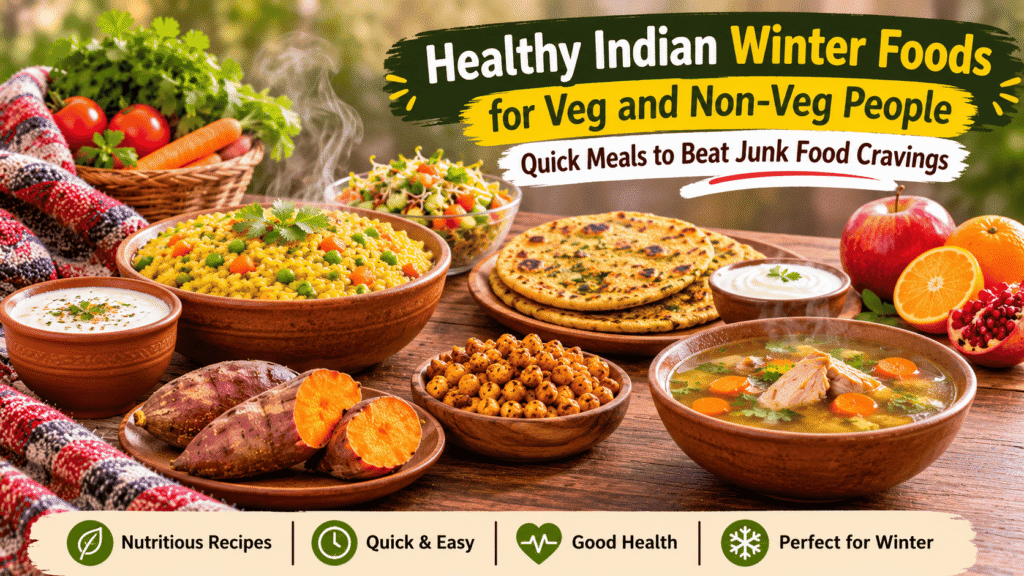
Winter is a season of warm blankets, cosy mornings and delicious food. But it is also the time when many people experience stronger cravings for hot, spicy and fried foods. Whether it is samosas, pakoras, burgers, pizza, noodles or other fast foods, resisting these temptations can become difficult.
When temperatures drop, we naturally look for comforting meals. Unfortunately, convenience often takes priority over nutrition. Instead of preparing something healthy, we may order fast food or reach for packaged snacks.
But what if you could enjoy delicious, warm and satisfying Indian food without compromising your health?
The good news is that India has plenty of seasonal vegetables, fruits, pulses, grains and protein-rich foods that are perfect for winter. You don’t need expensive ingredients or hours in the kitchen to prepare them.
In this article, let’s explore some healthy Indian winter foods for both vegetarian and non-vegetarian people that are easy to prepare, affordable and suitable for everyday meals.
1. Why Should You Choose Healthy Foods During Winter?
Winter cravings are normal, but our everyday food choices matter. Regularly consuming foods high in salt, added sugar and unhealthy fats can negatively affect our overall dietary habits.
As discussed in our previous article, From Taste to Trouble: How Junk Food Is Leading to Serious Diseases, frequently eating unhealthy food can contribute to weight gain and increase the risk of conditions such as type 2 diabetes and cardiovascular disease.
Instead of completely avoiding your favourite foods, try replacing some of your regular fast-food meals with healthier homemade alternatives.
Healthy winter meals can help you:
- Get essential vitamins and minerals from seasonal produce.
- Include more fibre through vegetables, fruits and whole grains.
- Meet your daily protein requirements.
- Maintain energy throughout the day.
- Feel satisfied without regularly depending on packaged snacks.
A balanced diet is not about eating less. It is about eating a variety of nutritious foods in appropriate quantities.
2. Best Healthy Vegetarian Indian Winter Foods
Vegetarian Indian meals offer plenty of nutritious choices. From traditional dishes to quick snacks, you can prepare something healthy without spending too much time.
1. Vegetable Moong Dal Khichdi
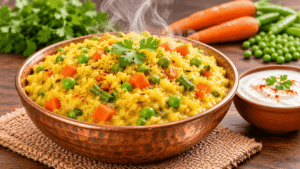
Preparation time: 15–20 minutes (with a pressure cooker)
Khichdi is one of the simplest and most comforting Indian winter meals.
Prepare it using rice, moong dal, carrots, peas, beans and a little turmeric. Cook everything together with water and moderate amounts of oil or ghee.
Why choose it?
- Moong dal provides protein.
- Vegetables add fibre, vitamins and minerals.
- Rice provides energy.
- It is easy to prepare and makes a satisfying meal.
You can serve it with plain curd or homemade vegetable raita.
2. Homemade Vegetable Soup
Preparation time: 10–15 minutes
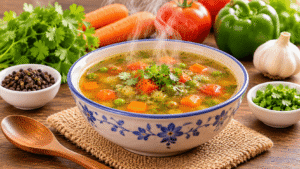
A bowl of hot vegetable soup can be an excellent evening snack or a light meal.
Take carrots, tomatoes, spinach, beans, cabbage and garlic. Boil or pressure-cook them, then blend if you prefer a smooth texture. Add black pepper, ginger and a little salt.
You can also add cooked moong dal to make the soup more filling and increase its protein content.
Avoid relying on packaged soup powders regularly, as some contain considerable amounts of sodium.
3. Methi, Gobhi and Palak Paratha
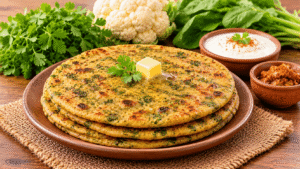
Preparation time: 15–20 minutes
Winter is an excellent season for fresh green vegetables.
Prepare whole-wheat parathas stuffed with:
- Methi (fenugreek leaves)
- Gobhi (cauliflower)
- Palak (spinach)
- Mooli (radish)
Use moderate amounts of oil or ghee while cooking.
Serve them with plain curd, which adds protein and calcium to the meal.
This is a practical alternative to ordering oily fast food when you want something hot and satisfying.
4. Roasted Chana and Peanuts
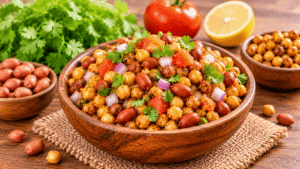
Preparation time: 2–5 minutes
Feeling hungry during office hours or in the evening?
Instead of opening a packet of chips, keep roasted chana or a small portion of unsalted peanuts available.
They provide protein, fibre and other nutrients. They are also convenient to carry to work.
You can prepare a quick snack by mixing roasted chana, peanuts, chopped onions, tomatoes, coriander and lemon juice.
5. Sweet Potato (Shakarkandi)
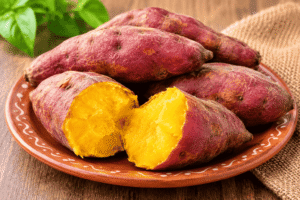
Preparation time: 10–15 minutes if pre-boiled
Shakarkandi is a popular winter food and an excellent alternative to many packaged snacks.
Boil or roast it, cut it into pieces and add lemon juice, black salt and roasted cumin powder.
Sweet potatoes provide carbohydrates, fibre and beta-carotene, which the body can convert into vitamin A.
It is naturally sweet, filling and requires very little preparation.
6. Bajra and Ragi Meals
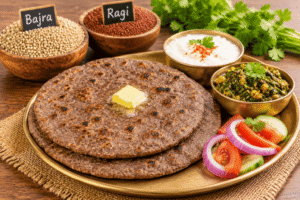
Preparation time: 10–15 minutes
Bajra (pearl millet) and ragi (finger millet) are useful additions to a varied Indian diet.
Try:
- Bajra roti with sarson ka saag.
- Ragi porridge with milk.
- Bajra khichdi with vegetables.
- Ragi dosa with homemade chutney.
Millets provide fibre and minerals, although their nutritional composition varies. Combine them with pulses, vegetables or curd to make a balanced meal.
7. Sprouts Salad
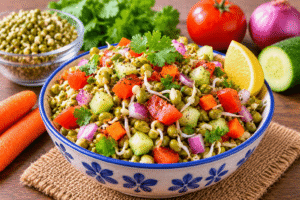
Preparation time: 5–10 minutes (using prepared sprouts)
Sprouted moong, kala chana or matki can make a nutritious snack.
Mix them with chopped tomatoes, onions, cucumber, coriander and lemon juice.
Add roasted cumin powder and a little black pepper for flavour.
Sprouts provide plant-based protein and fibre. If you prefer cooked food during very cold weather, lightly steam or cook the sprouts before preparing the salad.
3. Best Healthy Non-Vegetarian Indian Winter Foods
People who eat non-vegetarian food also have several healthy options during winter. Chicken, fish and eggs can provide high-quality protein when prepared using healthier cooking methods.
1. Homemade Chicken Vegetable Soup
Preparation time: 20–25 minutes
A warm bowl of chicken soup with vegetables is a satisfying winter option.
Ingredients:
- Small pieces of chicken.
- Carrots and beans.
- Onion and garlic.
- Ginger and black pepper.
- A little salt.
Boil everything together until the chicken is thoroughly cooked. Add coriander leaves before serving.
It provides protein from chicken and additional nutrients from vegetables.
2. Egg Bhurji with Whole-Wheat Roti
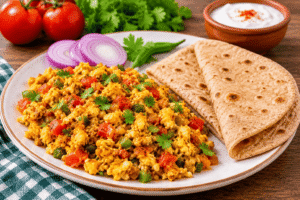
Preparation time: 10 minutes
Egg bhurji is one of the quickest homemade protein-rich meals.
Prepare it using eggs, onions, tomatoes, green chillies and coriander. Cook with a moderate amount of oil.
Serve it with whole-wheat roti instead of refined-flour bread.
It works well for breakfast, lunch or an early dinner.
3. Homemade Grilled Chicken
Preparation time: 20–25 minutes, excluding marination
If you crave burgers or fried chicken, try homemade grilled chicken instead.
Marinate chicken pieces with curd, ginger-garlic paste, turmeric, black pepper, lemon juice and a little salt.
Cook thoroughly on a grill pan, in an oven or in an air fryer.
Serve with vegetable salad and whole-wheat roti.
You get a satisfying meal without depending on deep-fried restaurant food.
4. Fish Curry with Rice
Preparation time: 20–25 minutes
Fish is another nutritious protein source.
Prepare a simple homemade fish curry using tomatoes, onions, ginger, garlic and moderate amounts of oil.
Serve it with rice and seasonal vegetables.
Fish varieties differ in their nutritional content. Some oily fish also provide omega-3 fatty acids.
5. Chicken and Vegetable Stir-Fry
Preparation time: 15–20 minutes
For people who have limited time, chicken stir-fry is a convenient option.
Cut chicken into small pieces and cook with carrots, capsicum, beans, onions and garlic.
Add black pepper, lemon juice and a small amount of oil.
Make sure the chicken is thoroughly cooked before serving.
You can enjoy it with whole-wheat roti or a small portion of rice.
Remember: Whether you are vegetarian or non-vegetarian, choosing homemade meals and limiting frequent consumption of deep-fried and highly processed foods can make a positive difference to your eating habits. If you want to understand the health risks associated with regularly eating such foods, read our article: From Taste to Trouble: How Junk Food Is Leading to Serious Diseases.
4. Healthy Indian Winter Fruits You Should Include
Winter also brings several seasonal fruits that are easy to include in your daily diet.
Here are some good options:
1. Orange: Provides vitamin C and fibre.
2. Guava: A good source of vitamin C and dietary fibre.
3. Amla: Rich in vitamin C and can be eaten fresh or added to chutney.
4. Apple: Provides fibre and makes a convenient snack.
5. Pomegranate: Contains fibre and beneficial plant compounds.
6. Papaya: Provides fibre, vitamin C and other nutrients.
Prefer whole fruits rather than packaged fruit juices. Whole fruits generally retain more of their natural fibre and help make a satisfying snack.
5. Quick Healthy Winter Food Ideas for Busy People
If you have a busy office schedule or don’t want to spend much time cooking, here are some practical combinations.
| Meal time | Vegetarian option | Non-vegetarian option |
|---|---|---|
| Breakfast | Vegetable poha or besan chilla | Egg bhurji with roti |
| Mid-morning | Guava or orange | Fruit with boiled egg |
| Lunch | Roti, dal, sabzi and curd | Roti, chicken curry and vegetables |
| Evening | Roasted chana or shakarkandi | Boiled eggs or homemade chicken soup |
| Dinner | Vegetable khichdi | Fish curry with rice |
These are examples, not fixed diet plans. Adjust portions according to your appetite, activity level and nutritional requirements.
6. Five Simple Ways to Control Winter Junk Food Cravings
Knowing which foods are healthy is important, but following those choices consistently is the real challenge.
Try these five simple habits:
1. Keep Healthy Snacks Ready
Keep roasted chana, peanuts, fruits or boiled sprouts available. When healthy food is easily accessible, you are less likely to depend on packaged snacks.
2. Prepare Ingredients in Advance
Wash and cut vegetables, prepare dough and soak pulses ahead of time. This makes cooking much quicker after returning from work.
3. Avoid Skipping Meals
Skipping meals can leave you extremely hungry and make it harder to control your food choices later.
4. Reduce Frequent Food Delivery
You don’t need to stop ordering your favourite food completely. However, try replacing some weekly fast-food orders with homemade alternatives.
For more information about how frequent junk food consumption can affect your health, you can also explore our detailed guide: From Taste to Trouble: How Junk Food Is Leading to Serious Diseases.
5. Make Healthy Food Enjoyable
Healthy food does not have to be boring. Use ginger, garlic, lemon, coriander, cumin, black pepper and other spices to improve flavour.
7. What Do Indian Government Nutrition Guidelines Recommend?
The Indian Council of Medical Research (ICMR) and its National Institute of Nutrition (NIN) published the Dietary Guidelines for Indians 2024.
These guidelines recommend eating a variety of foods to achieve a balanced diet. They highlight vegetables, fruits, whole grains, pulses, beans, nuts and seeds, along with appropriate amounts of dairy or other protein sources.
The Food Safety and Standards Authority of India (FSSAI), through its Eat Right India initiative, also encourages people to choose fresh, seasonal and locally available fruits and vegetables, whole grains and pulses.
Some useful government recommendations include:
- Choose whole grains instead of relying heavily on refined flour.
- Include vegetables and fruits regularly.
- Eat pulses, beans and other protein-rich foods.
- Limit excessive salt, sugar and unhealthy fats.
- Prefer healthier cooking methods such as steaming, boiling and roasting instead of frequent deep-frying.
You can read the official guidelines in the references below:
- ICMR-National Institute of Nutrition – Dietary Guidelines for Indians 2024
- FSSAI – Eat Right India
- FSSAI – Eat Right Handbook
Conclusion: Enjoy Winter Without Depending on Junk Food
Winter is a wonderful time to enjoy delicious food, but it doesn’t mean every craving needs to be satisfied with fast food.
From vegetable khichdi, homemade soups and stuffed parathas to chicken soup, egg bhurji and fish curry, there are plenty of healthy Indian options for both vegetarian and non-vegetarian people.
The best part is that most of these foods are affordable, easy to prepare and suitable for everyday meals.
You don’t need to completely give up pizza, burgers or your favourite snacks. Simply make healthier homemade food your regular choice and keep highly processed and deep-fried foods occasional.
Remember, healthy eating is not about following a perfect diet for a few days. It is about making better food choices consistently.
This winter, choose good food, enjoy homemade meals and take a small step towards a healthier lifestyle!
Disclaimer: This article is for general educational purposes and does not replace personalised dietary or medical advice. People with specific medical conditions, allergies or dietary restrictions should consult a qualified healthcare professional or registered dietitian.
I always crave samosas and pakoras during winter. These healthy alternatives look delicious. I will definitely try them!
Thank you for reading! 😊 You can enjoy your favourite winter foods occasionally, but homemade options like roasted chana and vegetable soup are great everyday alternatives.
Thanks for sharing these ideas. I was looking for quick and healthy food options because I have a busy office schedule.
You’re welcome! Try preparing roasted chana, vegetable soup or homemade parathas in advance. These options can make healthy eating easier even on busy working days.